
LAWN MOWERS AND PARTS
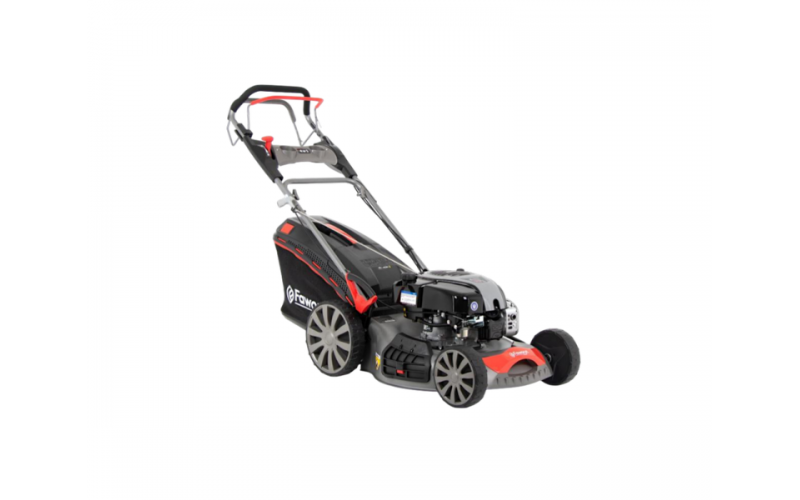
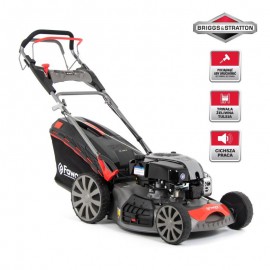
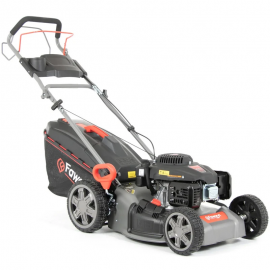
Self-propelled lawn mowers for easier lawn care
Self-propelled lawn mowers are a practical choice for those who want to maintain their lawn faster, easier and with less physical effort. Unlike standard push mowers, self-propelled models have a drive system that moves the mower forward. The operator only needs to guide the machine, which makes mowing more comfortable, especially in larger gardens, yards, rural properties, orchards or company grounds.
In this category, you will find petrol self-propelled lawn mowers designed for different lawn sizes and working conditions. The Agrobond range includes AL-KO lawn mowers, Faworyt lawn mowers and models from other manufacturers. They differ by cutting width, engine power, grass collector capacity, cutting height adjustment, side discharge option, mulching function and recommended lawn area.
Why choose a self-propelled lawn mower?
A self-propelled lawn mower is especially useful when a standard push mower becomes too heavy, too slow or uncomfortable to use. If the lawn area is medium-sized or larger, mowing with a self-propelled model can save time and reduce physical strain. This is useful not only for older users, but for anyone who wants to maintain the lawn more efficiently.
The drive system is helpful when cutting denser grass, mowing on a slight slope or working on uneven ground. The mower moves forward by itself, while the operator controls the direction and adjusts the cutting height according to the condition of the lawn.
Petrol self-propelled lawn mowers: when are they most practical?
Petrol self-propelled lawn mowers are often chosen for their power, reliability and ability to handle heavier workloads. They are especially practical when the grass is thicker, the area is larger or the lawn is not always cut on a strict schedule. A petrol engine helps maintain stable performance in taller or heavier grass, while the self-propelled drive reduces the effort required from the user.
This type of lawn mower is suitable for home gardens, orchards, rural properties, holiday homes, commercial grounds and other areas where reliable lawn care equipment is needed. It offers more productivity than a standard push mower, while remaining more compact, more affordable and easier to store than a garden tractor.
Self-propelled lawn mower or garden tractor?
When choosing lawn care equipment, many buyers compare self-propelled lawn mowers with garden tractors. Both options are useful, but they are designed for different situations. A self-propelled lawn mower is usually the more practical choice for medium-sized lawns, areas with trees, flower beds, paths, narrow passages or other obstacles. It is easier to maneuver, takes up less storage space, is easier to transport and usually costs less than a garden tractor.
A garden tractor is better suited for very large, open areas where the main goal is to mow a large territory quickly while working in a seated position. If the maintained area is very large, such as a large rural property, park, company territory or a lawn of several thousand square meters, a garden tractor can be the more productive choice. However, if the yard has many corners, obstacles and narrow areas, a self-propelled lawn mower will often be more practical.
In simple terms, a self-propelled lawn mower is best when you want comfort, maneuverability and lower overall cost. A garden tractor is worth considering when the lawn is so large that even a self-propelled mower becomes too slow.
AL-KO, Faworyt and other self-propelled lawn mowers
Agrobond offers self-propelled lawn mowers from different manufacturers, including AL-KO, Faworyt and other brands. These mowers are suited to different needs: some models are better for smaller and more complex gardens, while others are designed for larger and more open areas.
Self-propelled lawn mowers with a 46 cm cutting width are often chosen when maneuverability is important. They are convenient for mowing around trees, flower beds, paths, fences and other garden objects. Models with a 51 cm cutting width are better suited for larger lawns, because they cut a wider strip of grass in one pass and help finish the work faster.
How to choose the right self-propelled lawn mower?
When choosing a self-propelled lawn mower, it is important to consider more than just price or brand. The best choice depends on lawn size, terrain, mowing frequency, grass height and the level of comfort you expect. It is also worth checking the grass collection system, cutting height adjustment and additional functions.
Lawn size
The first step is to estimate the size of the area you need to mow. For smaller and medium-sized lawns, a compact self-propelled mower with a 46 cm cutting width is often enough. For larger lawns, a 51 cm model is usually more efficient because it covers more area with each pass.
Some self-propelled lawn mower models are suitable for approximately 1000, 1200, 1400 or even 1800 m² of lawn area. However, the indicated area should not be the only factor. Real conditions also matter: whether the lawn is flat, how many obstacles there are, how regularly it is cut and whether the grass often grows taller than usual.
Cutting width
Cutting width shows how wide a strip of grass the mower cuts in one pass. A wider cutting width allows you to mow open areas faster. However, a wider mower is not always the better choice.
If the yard is smaller, has many narrow places, trees, flower beds or paths, a more maneuverable 46 cm model may be more convenient. If the area is larger, flatter and more open, a 51 cm self-propelled lawn mower will usually be more productive.
Engine power
Engine power matters when the lawn is dense, taller or not cut every week. A more powerful petrol engine helps the mower work more consistently in tougher conditions. This is especially relevant for rural properties, larger plots and areas where the grass sometimes grows taller than in a typical home garden.
If the lawn is maintained regularly and the area is not very large, a medium-power model is often enough. The most important point is to choose the mower according to real use, not only according to the highest number in the specification table.
Grass collector capacity
If you want the lawn to look clean after mowing, choose a mower with a practical grass collector. A 60 l or 65 l collector allows longer work with fewer stops. A larger grass collector is especially useful when mowing a bigger area and trying to reduce interruptions.
Grass collection is suitable for areas near the house, relaxation zones and places where a tidy result is important. If the grass is taller or the lawn is cut less often, side discharge may sometimes be more practical.
Cutting height adjustment
Different seasons may require different cutting heights. In spring or after a longer break, it is usually better to choose a higher cutting setting. For regularly maintained lawns, a lower height can be used. Central cutting height adjustment makes this quick and convenient.
A wider cutting height range helps adapt the mower to different conditions. This is useful if the same mower is used for a home garden, orchard, rural property or less frequently maintained green areas.
Grass collection, side discharge and mulching
Modern self-propelled lawn mowers often offer several grass handling options. This helps choose the most suitable method for each situation and the desired result.
Grass collection into a bag is suitable when you want a clean and tidy lawn. The cut grass goes into the collector, so it does not remain on the lawn surface. This is convenient near the house, in relaxation areas and in representative parts of the property.
Side discharge is useful for larger areas or when the grass is taller. In this case, there is no need to empty the collector constantly, so the work can be done faster. This method is often used in rural properties, utility areas or places where perfectly clean collection is not required.
The mulching function finely cuts the grass and spreads it back onto the lawn. When mowing regularly and not cutting overly tall grass, mulching can be a very practical option. Fine grass particles decompose faster and can return some organic matter to the soil.
46 cm or 51 cm self-propelled lawn mower?
A 46 cm self-propelled lawn mower is usually suitable for smaller and medium-sized gardens. It is more convenient where there are more obstacles, narrow passages, flower beds, trees or decorative plants. This type of mower is easier to maneuver and helps cut more precisely around complex areas.
A 51 cm self-propelled lawn mower is better suited for larger, more open lawns. A wider cutting width reduces the number of passes and helps finish the job faster. It is a practical choice for rural properties, larger home gardens, orchards or company grounds.
When choosing between 46 cm and 51 cm, consider not only the total lawn size, but also the shape of the area. Sometimes a smaller cutting width is more practical if the yard has many objects and requires more maneuvering.
Who is a petrol self-propelled lawn mower best for?
A petrol self-propelled lawn mower is suitable for users who want a combination of comfort, productivity and practical size. It is especially useful when the lawn is not very small and mowing with a standard push mower takes too much time or effort.
This type of mower is a good choice if:
- you maintain a medium-sized or larger lawn;
- you want to reduce physical effort while mowing;
- you need a more compact solution than a garden tractor;
- the lawn has slight slopes or uneven ground;
- you want a mower with collection, side discharge and mulching;
- you are looking for a practical solution for a home garden, orchard, rural property or company territory.
Maintenance of a self-propelled lawn mower
To keep a self-propelled lawn mower working longer, regular maintenance is important. After mowing, remove grass residue from the cutting deck, check whether the discharge openings are blocked and clean the grass collector. Dirt and wet grass can encourage corrosion and interfere with normal operation.
The condition of the blade is also very important. A dull blade tears the grass instead of cutting it, which can make the lawn look worse. It also puts more load on the engine. Regular sharpening or replacement of the blade helps maintain better cutting quality and reduces strain on the mower.
Petrol lawn mowers also require checks of the oil level, air filter, spark plug and fuel system. Before the season, basic servicing is recommended, and after the season, the mower should be stored properly. A well-maintained mower starts more easily, works more consistently and keeps better performance for longer.
Self-propelled lawn mowers in Raseiniai and throughout Lithuania
Agrobond offers self-propelled lawn mowers to customers in Raseiniai and throughout Lithuania. In this category, you can find AL-KO, Faworyt and other models suited to different lawn sizes and working needs. The range may change depending on the season and product availability, so it is worth checking the category regularly or contacting us about a specific model.
If you are not sure which self-propelled lawn mower is best for your yard or rural property, evaluate the lawn area, terrain, mowing frequency and desired working comfort. It is also important to decide whether you will mainly use grass collection, side discharge or mulching. A properly selected mower will help you work faster, reduce physical effort and keep the property tidy throughout the season.
Frequently asked questions about self-propelled lawn mowers
What is the difference between a self-propelled lawn mower and a push mower?
A self-propelled lawn mower has a drive system that turns the wheels and helps the mower move forward. The user does not need to push it with full force. A push mower moves only as much as the operator pushes it.
When should I choose a self-propelled mower instead of a garden tractor?
A self-propelled mower is better for medium-sized lawns, more complex gardens and areas with more obstacles. A garden tractor is better for very large, open areas where speed and seated operation are the main priorities.
Should I choose a 46 cm or 51 cm cutting width?
A 46 cm cutting width is usually more convenient for smaller and more complex gardens. A 51 cm cutting width is better for larger, more open lawns where faster mowing is the goal.
What is the mulching function for?
The mulching function finely cuts the grass and spreads it back onto the lawn. It is useful when the lawn is mowed regularly and the grass is not too tall.
Does a petrol self-propelled lawn mower require a lot of maintenance?
A petrol self-propelled lawn mower needs regular maintenance, but it is not complicated. It is important to check the oil, air filter, blade, spark plug and fuel system, and to remove grass residue after mowing.
Self-propelled lawn mowers are a comfortable, efficient and practical choice for anyone who wants to maintain the lawn faster and with less effort. A properly selected petrol self-propelled lawn mower helps keep the area tidy, reduces workload and makes it easier to maintain a garden, orchard, rural property or larger green area throughout the season.